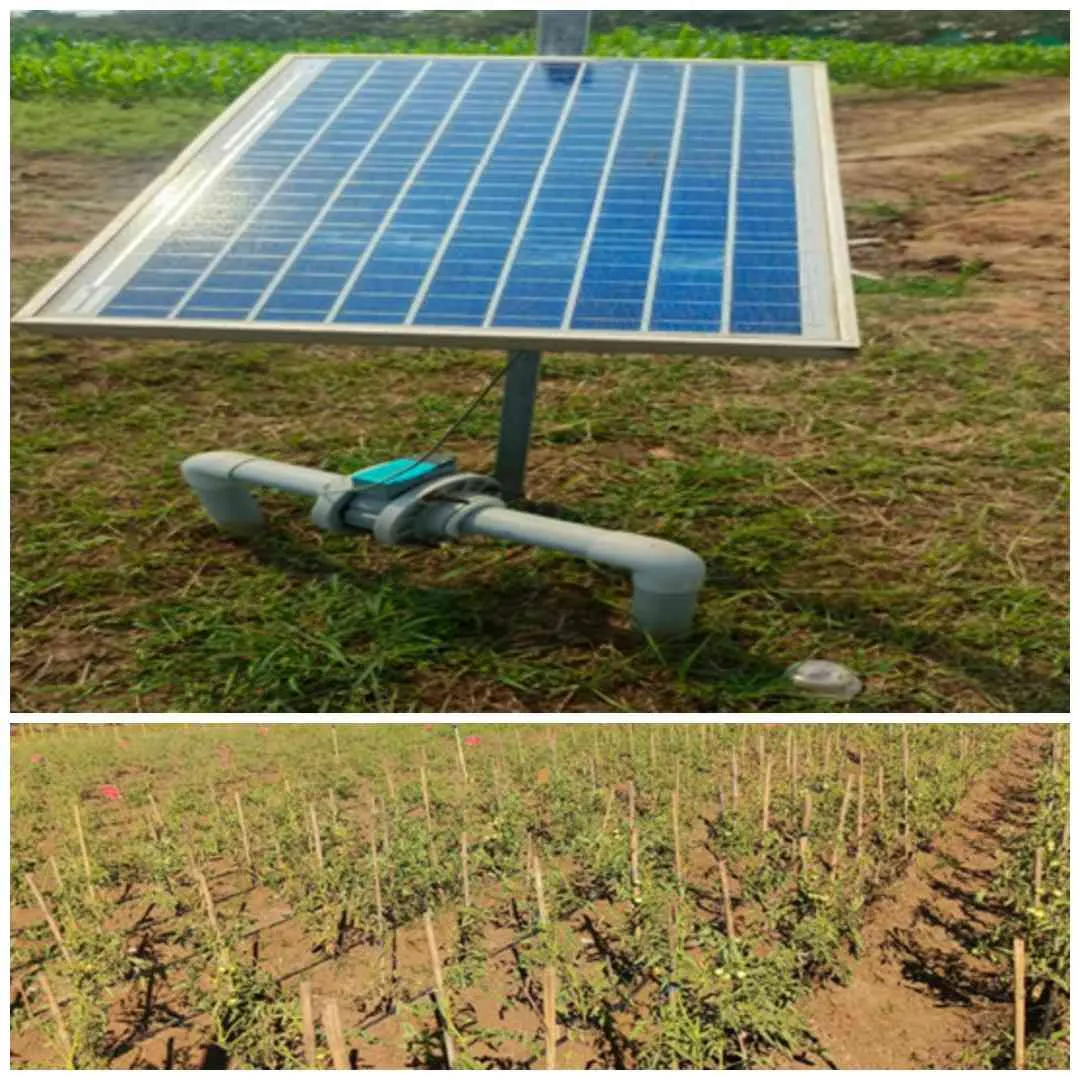
Cultivation of Tomato under IoT system at VIAT farm
Tomato cultivation using IoT-enabled moisture-based drip irrigation systems provides students with practical exposure to modern precision agriculture and smart farming technologies. In this system, soil moisture sensors are installed in the field to continuously monitor soil water levels and transmit real-time data to a controller or cloud platform. When the soil moisture falls below the required threshold, the system automatically activates the drip irrigation network, and irrigation stops once the desired moisture level is reached. This automated irrigation scheduling ensures that tomato plants receive the required amount of water at the right time, preventing both water stress and excessive irrigation.
The drip irrigation system delivers water directly to the root zone through emitters placed along lateral pipes, significantly improving water-use efficiency compared to conventional irrigation methods. The system can also be integrated with fertigation units, enabling the application of fertilizers through irrigation water in precise quantities. Students gain hands-on experience with important components such as soil moisture sensors, controllers, wireless communication modules, and mobile or cloud-based monitoring systems. By observing real-time data on soil moisture levels, irrigation cycles, and crop growth, students understand the relationship between water management and tomato productivity.
Exposure to this technology also introduces students to climate-smart agriculture and digital decision-support systems. By analyzing sensor-generated data, they learn to make informed irrigation decisions and optimize water and nutrient management. Such systems reduce labour requirements, improve resource efficiency, and support sustainable vegetable production under changing climatic conditions. Overall, IoT-based moisture-controlled irrigation strengthens students’ capacity to adopt data-driven, resource-efficient, and technology-oriented farming practices, preparing them for the future of digital and precision agriculture.