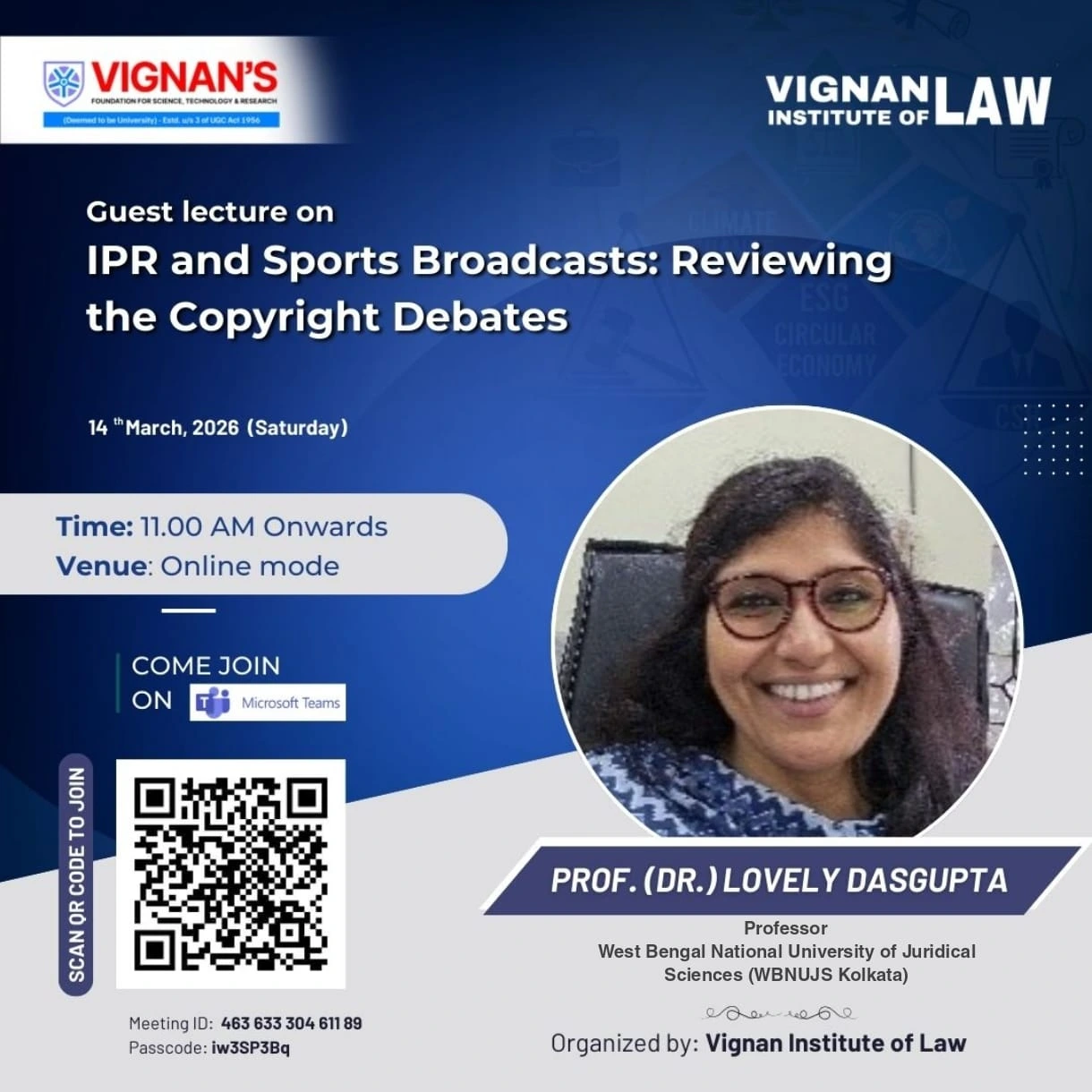
Prof. Das Gupta further explained the complex commercial ecosystem behind sports broadcasting rights. Event organizers such as national sports federations or international governing bodies monetize sporting events by selling broadcasting rights through competitive bidding processes. Broadcasters pay significant sums to obtain exclusive rights to transmit the live feed within specific geographical regions. She noted that sports broadcasting has become one of the most profitable segments of the media industry, with live sports generating significantly higher revenue compared to other forms of televised content such as award ceremonies or entertainment programs. The exclusivity of broadcasting rights ensures that the broadcaster can recover its investment through advertisements, subscriptions, and digital streaming services.
Another important dimension discussed in the lecture was the symbiotic relationship between sports and spectators. According to the speaker, sports derive their value from audience engagement, and the scale of spectatorship significantly influences the commercial success of sporting events. Broadcasting enables sporting events to reach audiences beyond stadium boundaries, thereby increasing their commercial and cultural impact. However, this expansion also creates legal and policy tensions between private commercial interests and public access to nationally significant sporting events.
The lecture also examined India’s legislative response to this issue through the Sports Broadcasting Signals (Mandatory Sharing with Prasar Bharati) Act, 2007. Under this law, broadcasters who acquire exclusive rights to major sporting events must share the broadcast signals of events of national importance with Prasar Bharati, India’s public service broadcaster. The objective is to ensure that the public can access important national sporting events even if the broadcasting rights are held by private media companies. However, the law requires broadcasters to share only the clean feed, meaning the basic live feed without additional commentary, graphics, or advertisements. Prasar Bharati can then add its own commentary and advertising content before broadcasting the event to the public.
Prof. Das Gupta also addressed the growing influence of technology in sports broadcasting. She explained how artificial intelligence (AI), digital graphics, multilingual advertising, and data-driven analytics are increasingly integrated into broadcast content to enhance viewer experience. These technological contributions further strengthen broadcasters’ claims to copyright protection because they involve creative and intellectual inputs. At the same time, these developments raise new legal questions about authorship, ownership, and the use of AI-generated content
Towards the latter part of the lecture, the speaker engaged with broader philosophical debates surrounding intellectual property law. She highlighted the contrast between Western models of copyright which emphasize individual authorship and commercialization and traditional knowledge systems in countries like India, where knowledge was historically transmitted orally and collectively. This difference, she explained, creates challenges when applying conventional copyright frameworks to cultural and communal knowledge traditions.
During the interactive session, participants raised questions about authorship in the context of AI-generated content and commentary in sports broadcasts. Prof. Das Gupta elaborated on the ongoing global debates about whether AI systems can be recognized as authors and how copyright law should adapt to emerging technologies. She pointed out that several creative industries have begun addressing these concerns through contractual agreements that limit the use of AI in creative production.
The lecture concluded with a formal vote of thanks by Mr. Bhagavatula Naga Sai Sriram, Assistant Professor cum Faculty Co-Coordinator of the Guest Lecture who expressed their gratitude to Prof. Lovely Das Gupta for sharing her expertise and providing valuable insights into the intersection of sports law, intellectual property rights, and digital broadcasting and also thanked Hon’ble Vice Chancellor, VFSTR, Registrar VFSTR, Dean School of Law and Management, Director VIL and all faculty members and students for the support extended and also who made this lecture a grand success. This lecture provided a comprehensive understanding of the legal, commercial, and technological dimensions of sports broadcasting rights. It encouraged students to explore emerging research areas at the intersection of intellectual property law and sports governance. The session served as a valuable academic platform for promoting discussion on contemporary legal challenges in media, technology, and sports law.